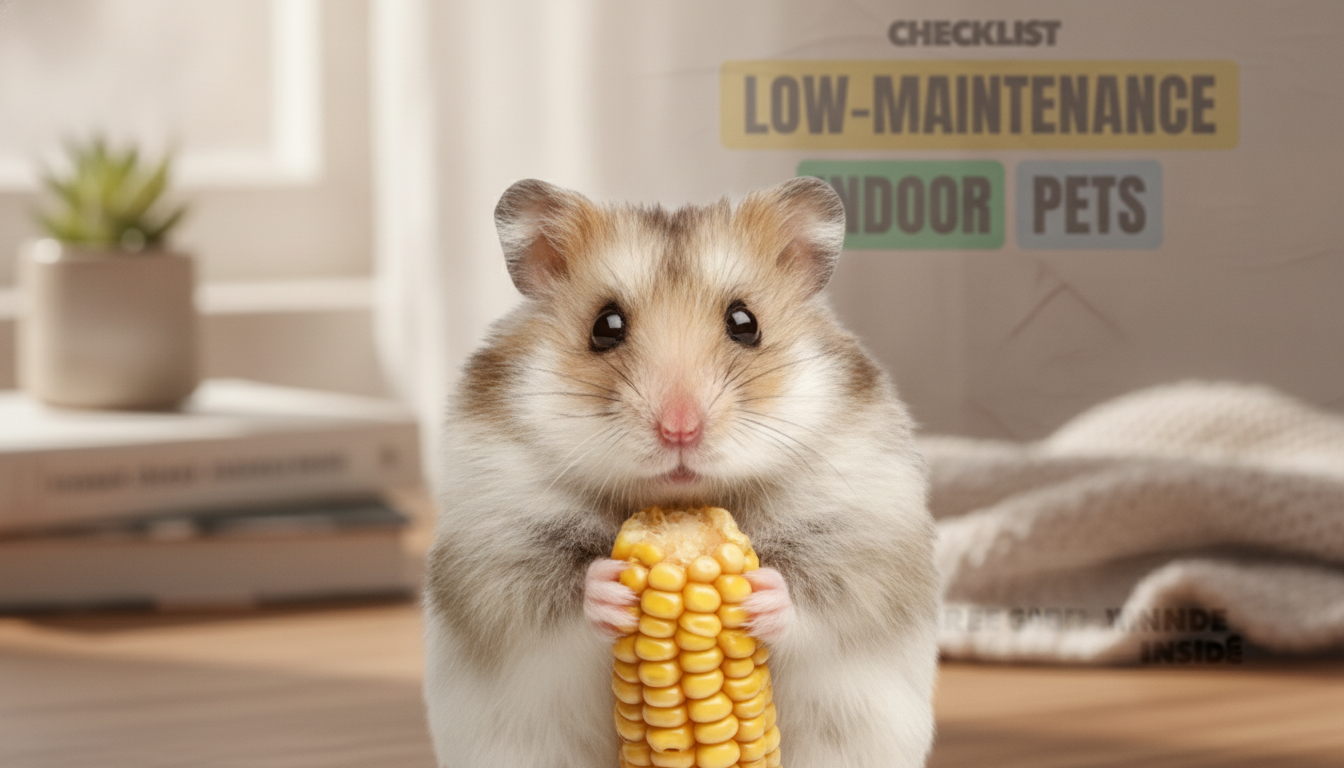
Indoor companionship can fit a packed calendar when the pet choice matches the time, space, and budget available. A “low-maintenance” pet isn’t a zero-effort pet—it’s one whose routine stays predictable, quick, and easy to delegate when life gets hectic. Use the checklist below to compare realistic options, set up a simple care rhythm, and avoid the common pitfalls that turn an “easy pet” into a daily scramble.
Tip: If a pet’s care can’t be written on one short “care card” (what to do, how often, where supplies are stored), it usually isn’t low maintenance for a busy schedule.
Low-maintenance usually means fewer daily tasks—not “no care.” Most pets still need regular feeding, habitat checks, and periodic deep cleaning. Aquatic pets can be hands-off day-to-day with the right setup, but require scheduled water testing and maintenance. Small mammals can be affectionate, yet often involve frequent cleaning and social needs that add time. Reptiles vary widely: some are calm and low-contact, but many require heat, UVB lighting, and careful habitat parameters. Invertebrates and micro-pets can be minimal interaction, but still need stable temperature/humidity and realistic handling expectations.
The simplest routines come from the same basics: correct enclosure size, stable temperature, automated lighting timers, and consistent supply storage.
| Pet type | Daily tasks | Weekly tasks | Setup notes | Best for |
|---|---|---|---|---|
| Betta fish (heated, filtered tank) | Feed; quick visual check | Water test; partial water change | Heater, filter, dechlorinator; avoid tiny bowls | Small spaces; light interaction |
| Neocaridina shrimp (planted tank) | Light feeding as needed | Top off water; basic checks | Stable tank; avoid sudden parameter swings | Quiet desks; low handling |
| Snails (freshwater) | Feed; remove leftovers | Glass wipe; water check | Provide calcium source; secure lid | Very low interaction households |
| Leopard gecko | Spot clean; check heat | Feed schedule; replace substrate as needed | Warm side heat source; hides; calcium | Calm pet with occasional handling |
| Corn snake | Spot clean; water refresh | Feed every 1–2 weeks; enclosure check | Secure enclosure is critical; stable temps | Busy adults comfortable with reptiles |
| Tarantula (beginner species) | Mist/check water dish (species-dependent) | Feed every 1–2 weeks | Low space; minimal handling advised | Low-touch pet keepers |
For general pet care basics and health considerations, reputable references like the American Veterinary Medical Association (AVMA) and CDC Healthy Pets, Healthy People are helpful starting points—especially when building routines that keep both pets and people safer.
Consistency beats complexity. A routine that fits into existing habits (coffee brewing, evening cleanup, Sunday reset) is far more likely to stick than a “perfect” schedule that requires motivation every time.
The Ultimate Low-Maintenance Indoor Pets Checklist (digital download) organizes setup essentials, recurring tasks, supply restock reminders, and a quick care card format for pet-sitters.
If your schedule is packed beyond pet care, you may also like a time-saving decision guide for other major life planning: Drive Smart in 2026: Choosing Between New and Used Cars Guide – eBook.
There isn’t one universal “lowest-maintenance” pet because effort depends more on the setup than the species name. Invertebrates and well-established aquatic setups (like shrimp or snails in a stable tank) often require the least daily interaction, but they still need routine checks and scheduled maintenance.
Fish can be low effort day-to-day once the tank is properly heated, filtered, and stable, but weekly water testing and water changes are non-negotiable. Small mammals often need more frequent cage cleaning and more consistent social interaction, which can add up quickly.
Plan on about 5–15 minutes per day plus one weekly maintenance block (often 15–30 minutes). Initial setup usually takes longer, and it’s smart to budget extra time for travel planning and the occasional unexpected issue.













Leave a comment