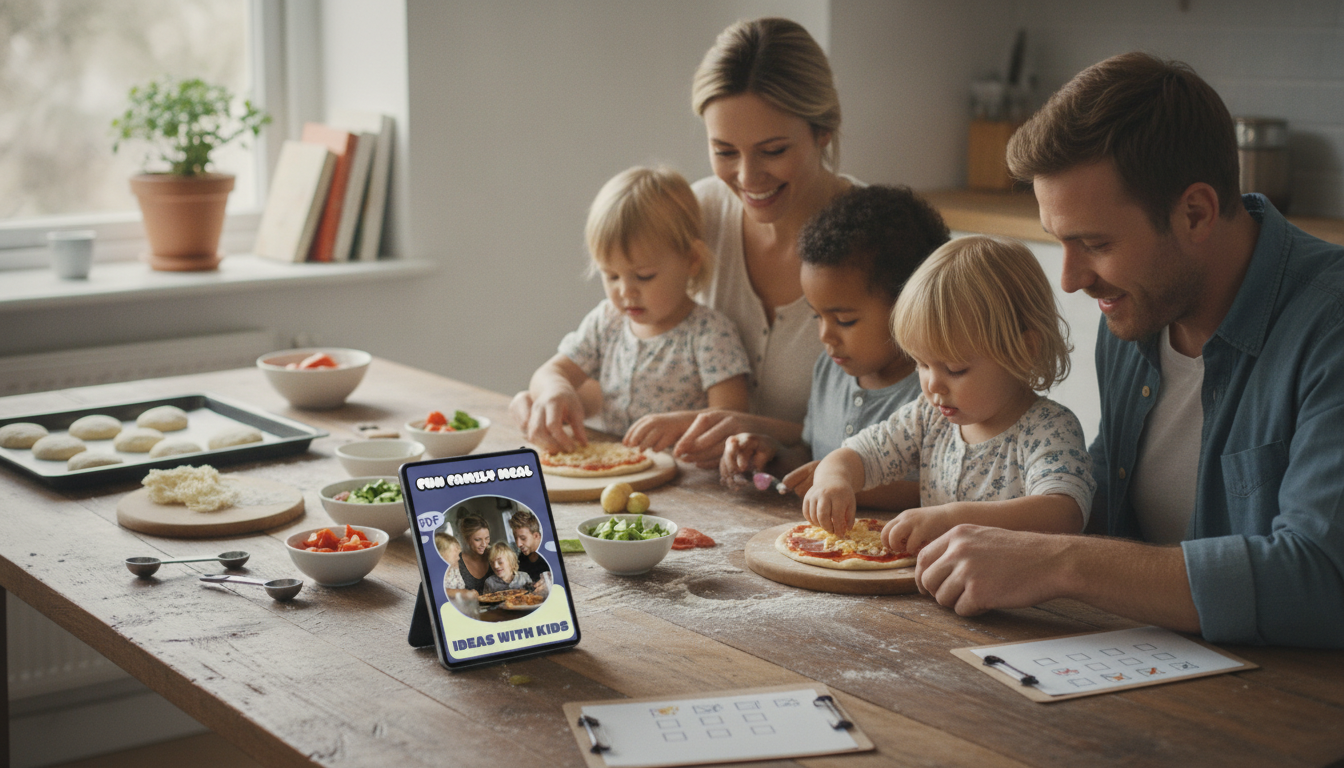
Turning dinner into a shared activity can lower mealtime stress, gently widen kids’ comfort zones, and make weekly planning feel lighter. Instead of chasing “perfect” meals, interactive dinners focus on simple choices and hands-on tasks that help kids feel included—without handing over the whole kitchen. Below are repeatable theme nights, low-prep planning tactics, age-appropriate jobs, and a copy-and-paste checklist you can keep in a notes app for quick weekly wins.
Interactive meals aren’t complicated—they’re structured. The goal is to give kids a little ownership while adults quietly keep the nutrition and timing on track.
If you want a simple guideline for balance, the USDA MyPlate plate model is an easy visual for building kid-friendly meals without counting or tracking.
Repeating a few theme nights is one of the fastest ways to simplify planning. Kids learn what to expect, and you build a grocery list that naturally overlaps.
| Theme | Kid job | Fast add-ons | Allergy-friendly swap |
|---|---|---|---|
| Taco/Bowl Night | Scoop and layer toppings | Microwavable rice, canned beans | Corn tortillas; dairy-free cheese |
| Pita Pizza Night | Spread sauce and sprinkle toppings | Pre-chopped veggies, rotisserie chicken | Gluten-free crust; vegan cheese |
| Snack-Board Night | Arrange items and pick a “try bite” | Leftovers, deli turkey, hard-boiled eggs | Seed butter; lactose-free yogurt |
| Breakfast-for-Dinner | Whisk eggs, add mix-ins | Frozen fruit, pre-cooked sausage | Egg-free pancake mix; turkey sausage |
| Pasta Bar | Choose sauce and toppings | Jarred sauce, frozen veg | Gluten-free pasta; lentil pasta |
Planning works best when it’s realistic. Instead of mapping seven “new recipes,” build a week around repeatable anchors and a couple flexible nights.
For more family-friendly nutrition basics (including toddler resources), the CDC nutrition pages are a solid reference when you’re trying to build consistent habits.
Copy this into a notes app and reuse it every week. The secret is limiting choices: one theme per night, then only a few ingredient decisions.
Small, safe jobs help kids participate without turning dinner into a drawn-out project. Keep tasks consistent so kids know their role right away.
If you want evidence-based, practical feeding guidance, the Academy of Nutrition and Dietetics kids nutrition resources are a helpful starting point.
Fun Family Meal Ideas with Kids – Printable Checklist for Parents includes a simple structure for choosing themes, listing ingredients, and tracking what worked for next week—so each week gets a little easier.
For another routine-simplifier that pairs well with streamlined evenings (especially on school mornings), consider Effortless Ways to Dress with Confidence – eBook Guide to reduce outfit decision fatigue and keep the day moving smoothly.
Plan 4–5 dinners and leave open space for leftovers, a rescue meal, and schedule surprises. Repeating a few theme nights reduces decisions and makes shopping more predictable.
Taco bowls, pita pizzas, snack-board dinners, and breakfast-for-dinner are quick because kids assemble while you handle one main cooking step. Time-savers like rotisserie chicken, salad kits, canned beans, and frozen vegetables can cut prep significantly.
Give each child one small, defined job (with a timer if needed) and set up a simple topping station so they can work independently. Keep roles predictable and match tasks to age so safety rules stay clear and you’re not re-teaching every night.













Leave a comment