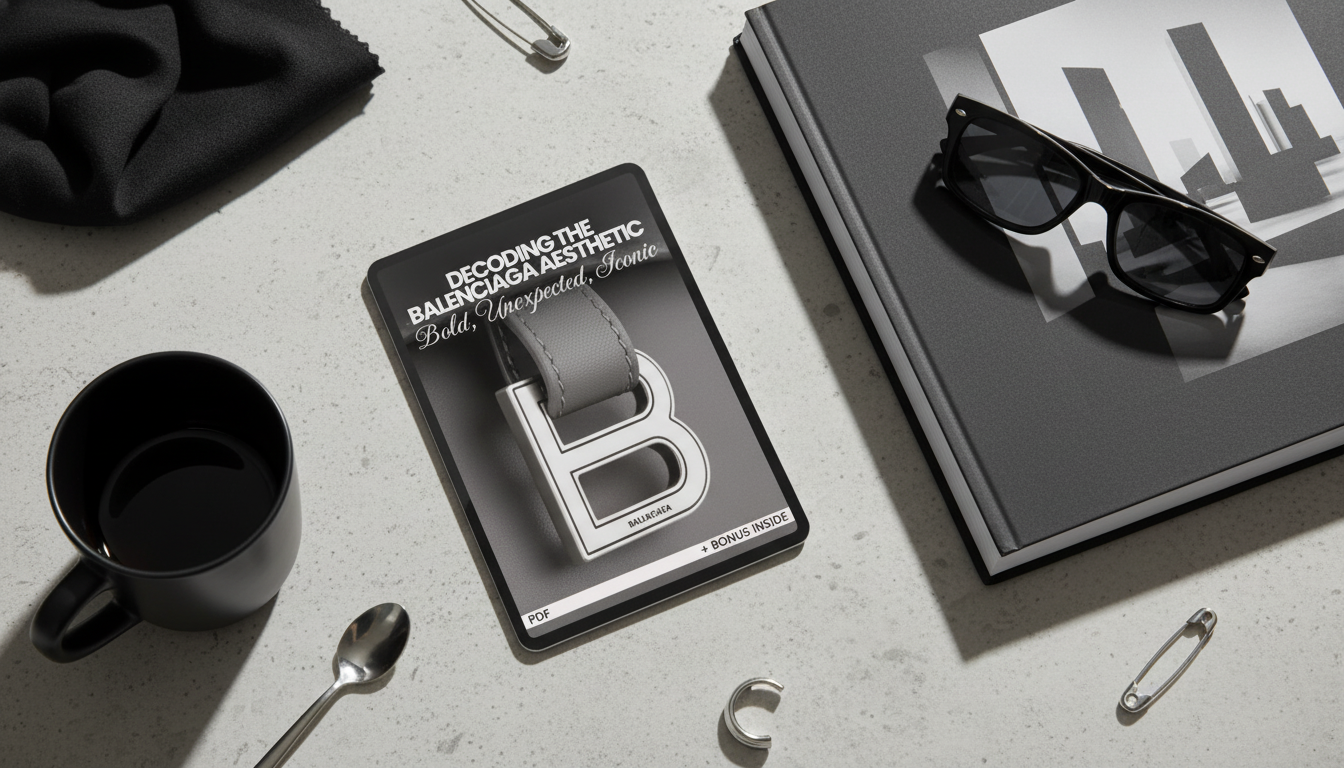
Balenciaga’s look can feel instantly recognizable yet hard to pin down: sculptural silhouettes, street-coded attitude, and runway ideas that flirt with the everyday. This guide breaks the aesthetic into clear building blocks—shape, proportion, materials, branding, and cultural references—so it’s easier to understand what makes the style unique from couture roots to modern streetwear impact. For more guidance, see Cristobal Balenciaga (1895–1972) – The Metropolitan Museum of Art.
At its core, the Balenciaga aesthetic runs on productive friction—refinement versus disruption. Pieces often look impeccably made, then “misbehave” through proportion, scale, or an everyday reference that feels almost too normal for luxury. For further reading, see Introducing Cristóbal Balenciaga – V&A.
| Element | What it looks like | Why it feels Balenciaga | Easy way to spot it |
|---|---|---|---|
| Exaggerated proportion | Oversized coats, wide shoulders, long sleeves | Creates a bold, architectural outline | Look for pieces that change the wearer’s silhouette |
| Street-to-couture contrast | Hoodies with elevated tailoring, sporty details with luxury finishes | Mixes everyday codes with high-fashion technique | Check seams, structure, and fabric weight |
| Minimal palette + impact | Black, grey, neutrals, occasional high-contrast pops | Lets shape and attitude lead | Outfit reads strong even without color |
| Branding as design | Logos, text graphics, repeated motifs | Turns identity into a visual element | Brand marks placed like focal points, not afterthoughts |
| Subversion/irony | Unexpected “normal” references elevated into luxury context | Challenges what “luxury” should look like | Details that feel deliberately plain or utilitarian |
The brand’s contemporary edge makes more sense when you trace it back to Cristóbal Balenciaga’s couture-era focus on form. His legacy wasn’t about surface decoration first—it was about structure, balance, and the quiet confidence of a garment that holds its own shape.
For more background on the designer’s history, see Encyclopaedia Britannica’s profile on Cristóbal Balenciaga and the fashion holdings at The Metropolitan Museum of Art.
Balenciaga helped cement a luxury language where everyday items become the canvas. The effect is often “uniform-like”: repeated shapes, muted tones, and staple categories (tees, denim, hoodies) treated with couture seriousness.
To compare current collections and styling direction, reference the Balenciaga official website.
If one lever defines the aesthetic, it’s proportion. The fastest way to get the “read” is to shift scale first, then let everything else stay calm.
Part of the brand’s impact comes from texture choices that can feel blunt, industrial, or intentionally “real.” The goal isn’t prettiness—it’s presence.
It’s defined by exaggerated silhouettes and deliberate proportion shifts, couture-level thinking applied to streetwear staples, a restrained palette, and subversive everyday references elevated into a luxury context.
It’s best understood as a hybrid: couture principles of shape and construction expressed through streetwear categories, amplified by runway storytelling that emphasizes contrast.
Choose one anchor—like oversized outerwear or bold footwear—keep colors muted, and build the rest with simple basics so the look feels intentional rather than costume-like.










Leave a comment